
What is spray foam insulation?
Spray polyurethane foam, usually shortened to SPF, is insulation that's made on the job site. Two liquid components are mixed at the spray gun, expand on contact and cure in place as a foam that insulates and air seals in one step.
A plain-English guide to how spray foam works, how it's installed, and why an airtight seal changes everything about how a home feels — whether you're a homeowner doing research or a pro who wants a page to send your customers.
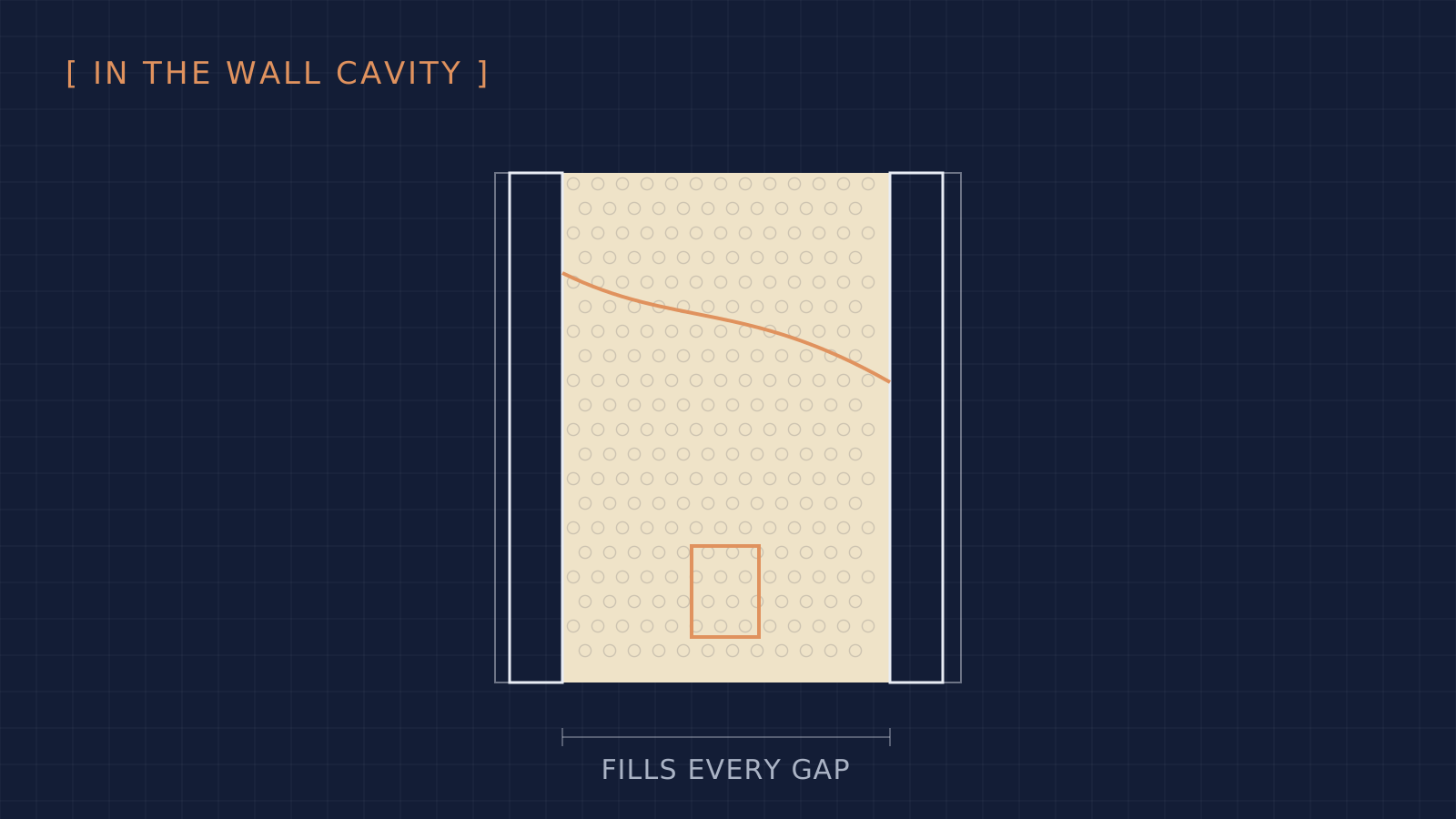
Insulation that's applied as a liquid — and becomes a seal
The foam arrives as two liquids in separate drums. The A-side is isocyanate. The B-side is a blended resin that carries the ingredients that make the foam rise and cure.
A proportioner on the installer's rig heats both liquids and pumps them through heated hoses to a spray gun. The two sides meet in the gun at a 1:1 ratio by volume and leave as a fine spray, applied directly to wall cavities, rooflines, crawl space walls and rim joists.
How it expands and cures
The moment the two sides mix, a chemical reaction starts. It gives off heat, forms the polyurethane, and inflates it into countless tiny cells. ComfortSeal 500 open cell foam is water-blown and expands roughly 100 times its liquid volume. ComfortSeal HFO closed cell foam uses an HFO blowing agent with a global warming potential of 1 and expands roughly 15 times.
Either way, the liquid flows into cracks, around wires and against uneven framing before it sets, then cures in seconds — ComfortSeal 500 into a semi-rigid foam, ComfortSeal HFO into a rigid one — bonded to whatever it touches. That's the fundamental difference from batts and blown-in products: spray foam doesn't just sit in the cavity, it becomes part of it.
Because the foam is made on site, the result depends on the right temperatures, pressures and a clean, dry surface — both products call for substrate moisture below 18%. That's why the work belongs with a certified installer.
The result is insulation and an air seal in a single step.
Open cell and closed cell, explained
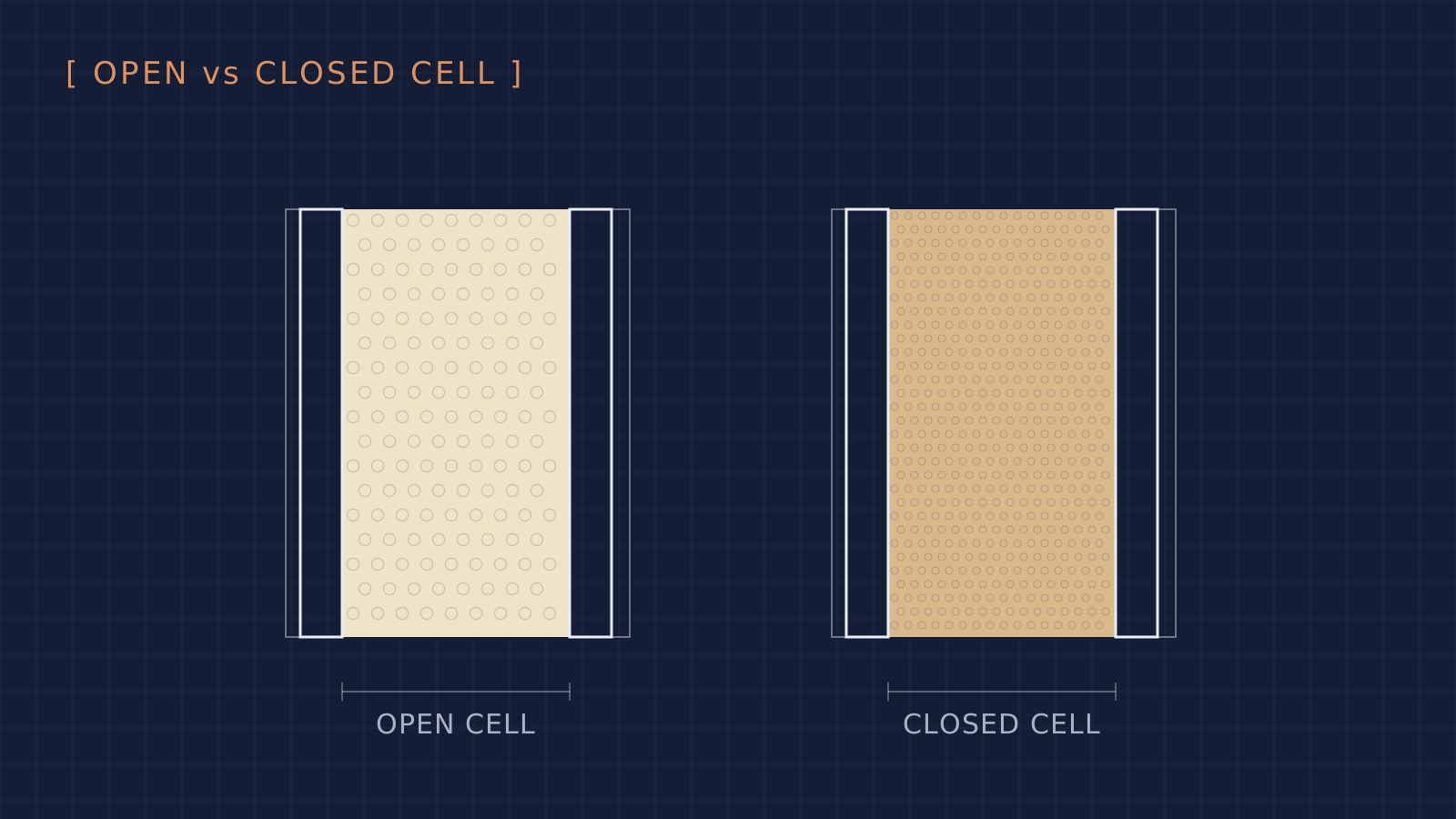
Both insulate and air seal. The difference is density, and what that density buys you. Open cell (ComfortSeal 500, 0.5 lb/ft³) cures semi-rigid and vapor-open, expands roughly 100 times to fill irregular cavities, absorbs sound (NRC 0.75, STC 39) and is R-13 at 3.5 inches (IAPMO ER-974). It suits interior walls, attic rooflines, sound control and retrofit.
The higher the R-value, the greater the insulating power. Ask your seller for the fact sheet on R-values.
Closed cell (ComfortSeal HFO, 2.0 lb/ft³) cures rigid, is R-25 at 3.5 inches (IAPMO ER-975), a Class II vapor retarder at 2 inches (0.45 perms) and tested to 210 psf wind uplift (UL 1897). It suits exterior walls, crawl spaces, unvented attics and rim joists. Both are thermal insulation, not structural elements. For the full decision guide, read open cell vs. closed cell spray foam.
Where each foam goes in a house
Neither foam is "better." The right one depends on the assembly and the climate. Here's where each ComfortSeal product is typically used.
Attic rooflines
Foam on the underside of the roof deck brings the attic — and any ducts and equipment in it — inside the home's envelope. Either foam can be used, depending on climate and the cavity (see the products page). See unvented attics, explained.
Exterior walls
Where cavities are shallow or moisture is a concern, ComfortSeal HFO puts more R-value in the same depth, slows vapor and cures into a rigid layer.
Interior walls & floors
Between bedrooms, around media rooms and under bonus-room floors, ComfortSeal 500's open cells absorb sound: NRC 0.75, STC 39.
Crawl spaces & rim joists
Near the ground, moisture matters most. ComfortSeal HFO absorbs little water (1.44% change, ASTM D2842) and showed no fungal growth in testing.
How thick is enough? R-value isn't simply a per-inch figure times thickness. IAPMO ER-975 lists ComfortSeal HFO at R-25 at 3.5 inches, R-28 at 4 inches and R-39 at 5.5 inches. Try the R-value calculator or read R-value by thickness, explained.
Air sealing and insulation are two different jobs
Insulation slows heat moving through a material; R-value measures how well. An air barrier stops air moving through the building, along with the heat, humidity and dust it carries. A house needs both. Fiberglass batts slow heat, but air passes through them and around their edges at every stud, wire and pipe.
Spray foam does both jobs in one layer. It insulates, and because it goes on as a liquid that bonds to the framing, it seals the gaps that let air in and out. ComfortSeal 500's data sheet reports an air leakage rate below 0.002 L/s·m² (ASTM E283). Conditioned air stays inside instead of leaking out, and a sealed house feels different: fewer drafts, steadier room temperatures, less outdoor noise. How much it saves on energy depends on the house, the climate and what the foam replaces. Our homeowners page covers what changes day to day.
Moisture and vapor, in plain English
Air carries water vapor, and vapor also moves through materials, from the warm, humid side of a wall toward the cool, dry side. If it reaches a cold enough surface, it condenses. Good assembly design controls where that can happen and lets anything that gets damp dry out again.
Vapor permeance, measured in perms under ASTM E96, describes how easily vapor passes through a material. The two ComfortSeal foams sit at opposite ends. ComfortSeal 500 is vapor-open at 21 perms at 1 inch: it stops air but lets vapor pass, so assemblies can dry toward the interior. ComfortSeal HFO is a Class II vapor retarder at 0.45 perms at 2 inches: it slows vapor as well as air, which is why it's favored in crawl spaces and humid or high-wind climates.
The right choice depends on your climate, the assembly and local code. Our guide to reading a data sheet explains perms and the other numbers you'll see.
Ignition barriers and thermal barriers
Spray foam is a foam plastic, and building codes treat foam plastics carefully. Both ComfortSeal products rate Class I under ASTM E84, with a flame spread index under 25 and a smoke developed index under 450. That's a baseline property of the foam. On its own, it doesn't mean the foam can be left exposed. Codes usually call for one of two kinds of protection.
A thermal barrier separates foam from the rooms people live in. Half-inch gypsum wallboard is the familiar example; where foam stays exposed, a tested coating can take its place. In NFPA 286 testing, ComfortSeal 500 passed with DC315 at 18 wet / 12 dry mils (foam up to 8 inches on walls and 14 on ceilings, ER-974 Table 4), and ComfortSeal HFO passed 15 minutes at 14 wet / 9 dry mils with DC315 (up to 5.5 inches on walls, 9.5 on ceilings) or No-Burn Plus ThB (up to 7 on walls, 10 on ceilings, ER-975 Table 2).
An ignition barrier is lighter protection for spaces entered only to service equipment, such as many attics and crawl spaces. Under ICC-ES AC377 Appendix X, ComfortSeal 500 passes with DC315 at 6 wet / 4 dry mils or No-Burn Plus ThB at 4 wet / 3 dry mils (ER-974 Table 5). ComfortSeal HFO can be left uncoated in an attic or crawl space only if the space is entered just to service utilities, has no storage, isn't interconnected, doesn't circulate air to the house, and the foam is no more than 10 inches on the roof deck or 6 inches on walls (ER-975 Section 4.5.2.2); the space still needs a thermal barrier between it and the living areas.
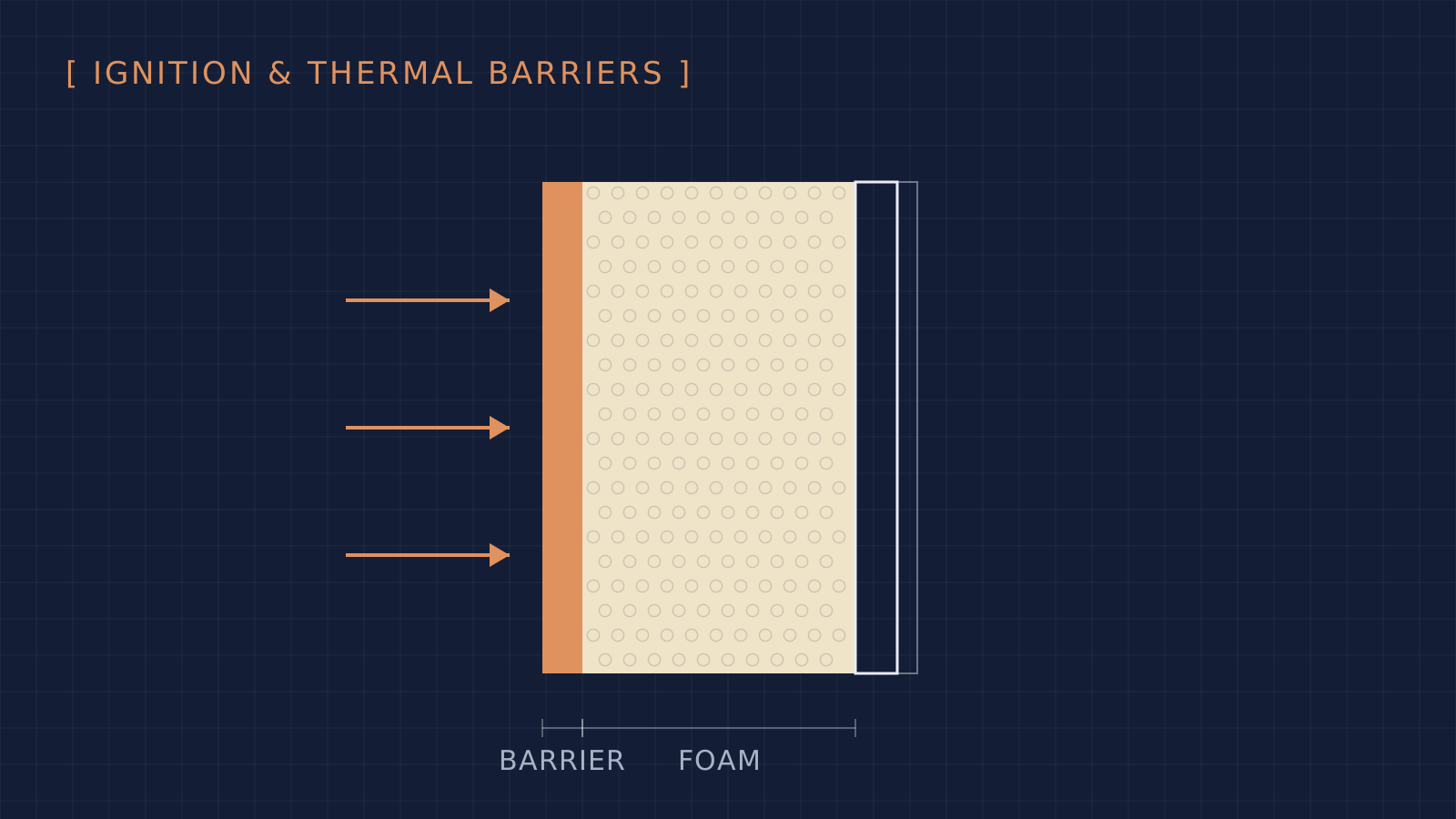
Your local building official has the final say on what each space needs. For the full picture, read ignition barrier vs. thermal barrier.
What happens on install day
Every house is different, but a professional installation generally follows the same pattern. Your installer will walk you through the schedule.
Plan
Beforehand, the installer confirms which foam goes where, how thick, and what barrier or covering code requires in each space.
Prep
The crew masks windows, fixtures and finished surfaces, sets up ventilation, and checks that surfaces are clean, dry and warm enough to spray.
Spray & trim
Certified installers apply the foam in controlled passes. It cures in seconds, and any overfill is trimmed flush so drywall goes up as planned.
Finish & return
Any required barrier goes on, the crew cleans up, and the installer tells you when to come back in. Stay out of the work area until then.
How to choose a spray foam installer
Because spray foam is made on site, the installer matters as much as the product. Before you sign, ask:
Are you certified for the foam you're installing? ComfortSeal installations qualify for the limited lifetime warranty only when a certified ComfortSeal installer does the work.
Which foam goes where, and why? A good installer explains the choice for each part of the house — air sealing, vapor control, sound, R-value — instead of quoting one foam everywhere.
Where do your numbers come from? Ask for thickness and R-value by area, backed by the data sheet and evaluation report. Ours are all in the Tech Library.
What does code require here? The installer should know whether each space needs a thermal barrier, an ignition barrier or neither, and include it in the quote.
What's warranted, and by whom? The ComfortSeal limited lifetime warranty covers the foam for the life of the home. Workmanship is the installing contractor's responsibility, so ask what they stand behind.
The simplest place to start is to request a certified ComfortSeal installer. Tell us about the house and our team will connect you.
What does it cost?
Spray foam is priced by the area and the thickness sprayed, so the answer depends on which foam goes where, how deep the cavities are, and the prep and barrier work each space needs. A certified installer prices it from a site visit. For what goes into a quote and how to compare two, read how much spray foam insulation costs.
Spray foam, frequently asked
What is spray foam insulation made of?+
Spray foam is a two-component polyurethane system: an A-side (isocyanate) and a blended B-side (resin), mixed 1:1 by volume at the spray gun. It expands on contact — roughly 100 times for ComfortSeal 500 and 15 times for ComfortSeal HFO — and cures in seconds.
How is spray foam installed?+
Certified installers use equipment that heats and pressurizes the two components and sends them through heated hoses to a spray gun. The foam expands to fill the cavity and cures in seconds; overfill is trimmed and any required barrier applied.
What's the difference between open cell and closed cell?+
Open cell (ComfortSeal 500) is 0.5 lb/ft³ and R-13 at 3.5 inches, vapor-open and good at absorbing sound. Closed cell (ComfortSeal HFO) is 2.0 lb/ft³ and R-25 at 3.5 inches, a Class II vapor retarder at 2 inches, and cures rigid.
Is spray foam insulation safe?+
On application day, no: the chemicals are hazardous while they are being sprayed, so certified professionals do the work, the area is ventilated, and occupants stay out until the installer says it is cleared to return. Once cured, the foam is a stable solid. Both ComfortSeal products rate Class I for flame spread and smoke under ASTM E84, and like other foam plastics they're covered by a thermal or ignition barrier where code requires.
Why does air sealing matter more than R-value alone?+
R-value measures resistance to heat flow through a material, but says nothing about air leaking through gaps and seams. Spray foam insulates and air-seals in one step, so conditioned air stays inside. How much that saves depends on the house, the climate and what the foam replaces.
Is spray foam a vapor retarder?+
It depends on the foam. ComfortSeal HFO closed cell is a Class II vapor retarder at 0.45 perms at 2 inches. ComfortSeal 500 open cell is vapor-open at 21 perms at 1 inch, so assemblies can dry to the interior. Which you want depends on your climate and the assembly.
Does spray foam have to be covered?+
Usually. Living spaces typically need a thermal barrier such as drywall or a tested coating, and limited-access attics and crawl spaces typically need an ignition barrier. ComfortSeal HFO can be left uncoated in an attic or crawl space only if the space is entered just to service utilities, has no storage, isn't interconnected, doesn't circulate air to the house, and the foam is no more than 10 inches on the roof deck or 6 inches on walls (ER-975 Section 4.5.2.2); the space still needs a thermal barrier between it and the living areas. Your building official has the final say.
Can I install spray foam myself?+
No — both IAPMO reports require installation by contractors certified by USAFoam, LLC (ER-974 Section 2.2, ER-975 Section 2.5). It is a two-component system processed through heated, pressurized equipment within set temperature and pressure ranges, and certified installation is also a condition of the limited lifetime warranty on the foam.
See what spray foam can do for your project
Explore the two ComfortSeal products, or get connected with a certified installer near you.