
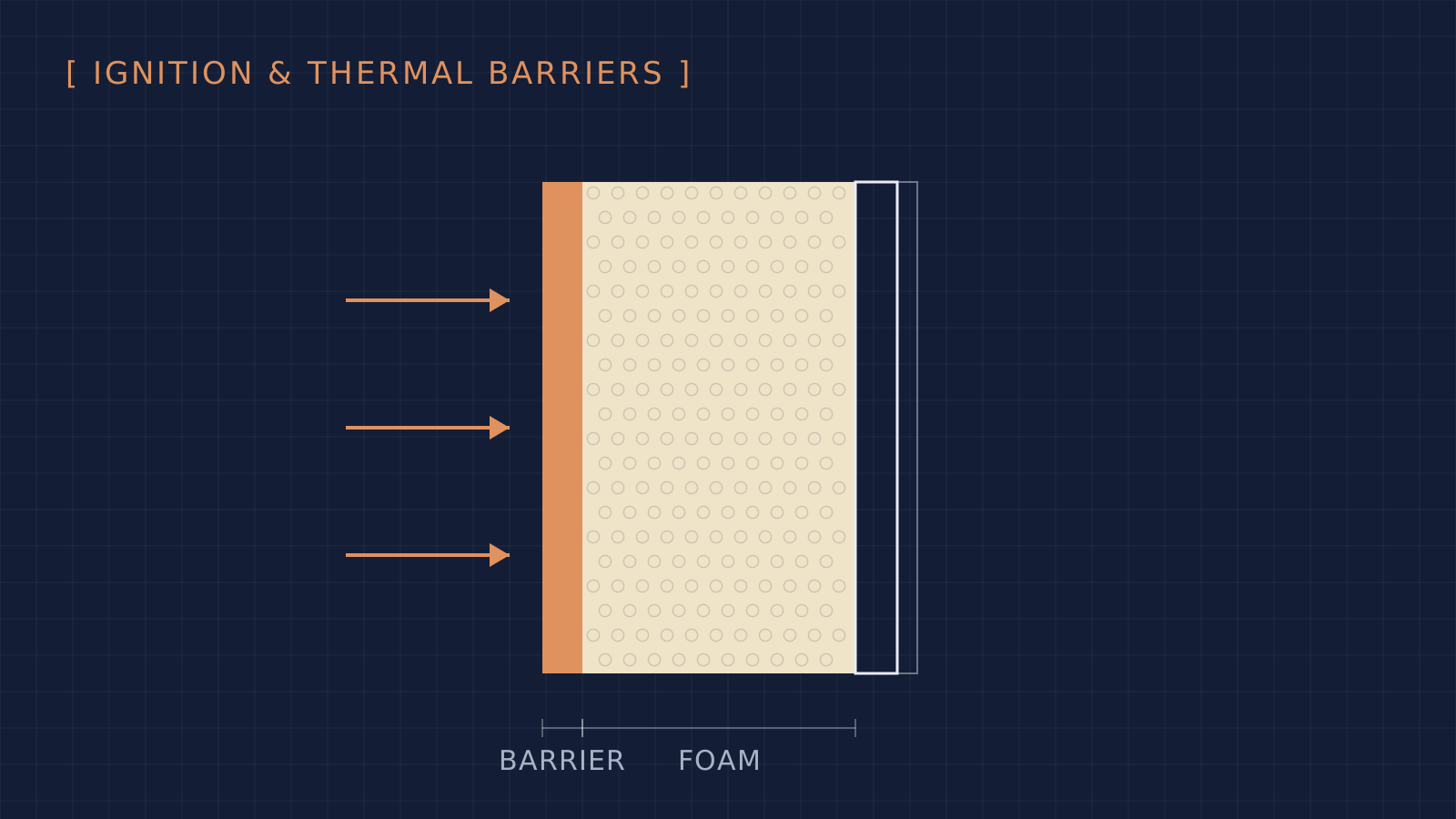
"Does this foam need a barrier?" is a common question on a spray foam job, and a commonly muddled one. The confusion usually comes from two terms that sound alike: ignition barrier and thermal barrier. They are not the same thing, they don't apply in the same places, and a product that can skip one may still need the other.
This guide explains both in plain English, shows where each one typically applies, and walks through exactly what the ComfortSeal 500 and ComfortSeal HFO evaluation reports list. One rule runs through all of it: your local building official has the final say, so confirm requirements for your jurisdiction before the job starts.
The plain-English difference
Spray polyurethane foam is a foam plastic, and building codes treat foam plastics carefully when it comes to fire. The goal of both barriers is the same — keep the foam protected — but the level of protection is very different.
- A thermal barrier is the heavier-duty protection. It separates foam from the spaces where people live and is meant to slow heat from reaching the foam during a fire. Half-inch gypsum wallboard is the familiar prescriptive example. Where foam will be left exposed, an approved alternative — often a tested coating — can take its place.
- An ignition barrier is lighter protection meant for spaces people only enter occasionally to service equipment, like many attics and crawl spaces. Its job is to keep the foam from being easily ignited by a small flame source.
A simple way to remember it: thermal barrier for where people live, ignition barrier for where people only visit.
Where each one typically applies
The table below is a general guide to how codes usually sort spaces. Details vary by code edition and jurisdiction — for example, an attic used for storage may be treated differently from one entered only to service equipment — so treat it as a starting point for the conversation with your building official, not a substitute for it.
| Space | What's typically required | Why |
|---|---|---|
| Occupied living space | Thermal barrier | People live here, so foam is separated from the room. |
| Finished rooms & walls | Thermal barrier | Usually satisfied by the drywall that finishes the room. |
| Attics (limited access) | Ignition barrier, or an approved alternative | Entered only to service utilities, not lived in. |
| Crawl spaces (limited access) | Ignition barrier, or an approved alternative | Entered only for service and repairs. |
The phrase "or an approved alternative" is where evaluation reports and tested coatings come in, and it's where the two ComfortSeal products differ.
The tests behind the terms
Three test names come up again and again on data sheets. Knowing what each one does helps you read the fire section of any foam's paperwork.
- ASTM E84 measures surface burning characteristics — how far flame spreads across a material and how much smoke it develops. Both ComfortSeal products rate Class I, with a flame spread index of 25 or less and a smoke developed index of 450 or less, tested at up to 4 in. That's a baseline property of the foam itself. On its own, it doesn't mean the foam can be left exposed.
- NFPA 286 is a room-corner fire test. The material is installed in a full-size test room and exposed to a fire source in the corner. It's used to evaluate whether foam plus a coating can serve as an alternative to a prescriptive thermal barrier.
- ICC-ES AC377 Appendix X is the acceptance criteria used to evaluate spray foam in attics and crawl spaces without the prescriptive ignition barrier materials — either the foam alone or the foam with a specific coating.
What the evaluation reports list
Here are the barrier results as listed in each product's IAPMO evaluation report. DC315 (International Fireproof Technology) and No-Burn Plus ThB (No Burn, Inc.) are the coatings named in those tables; "wet" and "dry" mils refer to the coating thickness as sprayed and after it cures. Every coating result also carries a maximum foam thickness, shown in the last column.
| Product | Ignition barrier (AC377 App. X) | Thermal barrier (NFPA 286) | Maximum foam thickness |
|---|---|---|---|
| ComfortSeal 500 | Prescriptive ignition barrier, or DC315 at 6 wet / 4 dry mils or No-Burn Plus ThB at 4 wet / 3 dry mils (ER-974 Table 5) | Prescriptive barrier (½-in. gypsum), or DC315 at 18 wet / 12 dry mils (ER-974 Table 4) | Ignition-barrier coatings: 9.5 in. (DC315) or 10 in. (Plus ThB) on walls, 14 in. on ceilings. Thermal-barrier coating: 8 in. on walls, 14 in. on ceilings. |
| ComfortSeal HFO | No coating in service-only attics and crawl spaces, within ER-975 Section 4.5.2.2 conditions | Prescriptive barrier, or DC315 or No-Burn Plus ThB at 14 wet / 9 dry mils (15-minute pass, ER-975 Table 2) | Uncoated: 6 in. on walls, 10 in. on the roof deck. Thermal-barrier coatings: DC315 5.5 in. walls / 9.5 in. ceilings; Plus ThB 7 in. walls / 10 in. ceilings. |
ComfortSeal 500, the open cell product, can use a listed coating instead of a prescriptive barrier in both situations. In an attic or crawl space, a thin coat of DC315 at 6 wet / 4 dry mils or No-Burn Plus ThB at 4 wet / 3 dry mils is what IAPMO ER-974 Table 5 lists as the alternative to a prescriptive ignition barrier. Where the foam would otherwise be exposed to living space, Table 4 lists a heavier coat of DC315 — 18 wet / 12 dry mils — as the alternative to a prescriptive thermal barrier, up to 8 inches of foam on walls and 14 inches on ceilings.
ComfortSeal HFO, the closed cell product, needs no ignition barrier coating in service-only attics and crawl spaces (up to 10 inches on the roof deck and 6 inches on walls) when the conditions in ER-975 Section 4.5.2.2 are met: entry only to service utilities, no storage, the space not interconnected with other attic or crawl areas, and no air circulated from it to the rest of the house. For exposed applications, it passed NFPA 286 for 15 minutes with DC315 or No-Burn Plus ThB at 14 wet / 9 dry mils, at the foam thicknesses in ER-975 Table 2.
A coating result is only as good as the thickness on the wall. Crews should check wet film thickness with a wet film gauge as they spray, because the dry figure is what's left after the coating cures. Hitting the wet number is how you get to the dry number.
What "no ignition barrier required" does — and doesn't — mean
ComfortSeal HFO's AC377 Appendix X result is a genuine advantage in attics and crawl spaces: one less material to buy, one less step to schedule, and one less thing to inspect. But it's worth being precise about its limits.
- It applies to attics and crawl spaces — the limited-access spaces AC377 Appendix X is written for.
- It does not mean ComfortSeal HFO can be left exposed in living space. Occupied areas still need a thermal barrier, whether that's drywall or the tested coating at the thickness shown above.
- The evaluation report sets conditions of use. Read ER-975 for ComfortSeal HFO and ER-974 for ComfortSeal 500 before relying on any result.
Planning a foam-sealed roof deck? Barrier rules are one piece of that puzzle; our guide to unvented attics with spray foam covers the rest.
A practical pre-job checklist
- Name the space. Is the foam going into occupied living space, or into an attic or crawl space entered only for service?
- Pull the paperwork. Download the data sheet and evaluation report from our Tech Library and bring them to the permit conversation.
- Pick the protection. Drywall, a tested coating at the listed thickness, or — for ComfortSeal HFO in attics and crawl spaces — no ignition barrier coating.
- Match the coating exactly. Use the coating named in the result and apply it at the listed wet mils, following the coating manufacturer's instructions.
- Confirm with the building official. Local amendments and the official's interpretation decide what's accepted on your job.
Thermal barrier where people live, ignition barrier where people only visit. ComfortSeal HFO can skip the ignition barrier coating in service-only attics and crawl spaces within ER-975 limits; ComfortSeal 500 uses a listed coating from ER-974. Neither result lets foam stay exposed in living space, and the building official decides what is accepted.
If you want to understand the rest of the numbers on a data sheet, read how to read a spray foam technical data sheet. Contractors and architects with a specific assembly in mind can contact our team.
Frequently asked questions
What is the difference between an ignition barrier and a thermal barrier?
A thermal barrier is the heavier protection that separates foam plastic from spaces where people live; half-inch gypsum wallboard is the familiar prescriptive example. An ignition barrier is lighter protection for attics and crawl spaces entered only to service utilities. Thermal barrier for where people live, ignition barrier for where people only visit.
Does ComfortSeal HFO need an ignition barrier in an attic?
Not in a service-only attic or crawl space when the conditions in IAPMO ER-975 Section 4.5.2.2 are met: entry only to service utilities, no storage, no interconnection with other attic or crawl areas, no air circulated to the house, and foam within 10 inches on the roof deck and 6 inches on walls. It still needs a thermal barrier next to living space.
What coating does ComfortSeal 500 need in an attic or crawl space?
IAPMO ER-974 Table 5 lists DC315 at 6 wet / 4 dry mils or No-Burn Plus ThB at 4 wet / 3 dry mils as alternatives to a prescriptive ignition barrier, within the table's maximum foam thicknesses. Where the foam would be exposed to living space, Table 4 lists DC315 at 18 wet / 12 dry mils as the thermal barrier alternative.
Which fire tests appear on a spray foam data sheet?
Three come up most. ASTM E84 measures surface burning; both ComfortSeal foams rate Class I at up to 4 inches. NFPA 286 is a room-corner test used to qualify foam plus a coating as a thermal barrier alternative. ICC-ES AC377 Appendix X is the acceptance criteria for foam in attics and crawl spaces without a prescriptive ignition barrier.