
Spray foam insulation
for your home
A house that finally holds its temperature.
Spray foam seals the gaps ordinary insulation leaves behind, so your home stays warm in winter, cool in summer and quiet all year. Installed by certified crews, backed by a limited lifetime warranty on the foam.
Your insulation isn't the problem. The gaps are.
Fiberglass and cellulose slow heat down, but air slips straight past them. Spray foam stops the air itself — at the four places most homes lose it.
Attic
A major source of heat loss and gain in many homes. Sealing the roofline brings the attic inside.
Walls
Batts leave gaps around wiring and outlets. Foam expands to fill the gaps.
Rim joists
Where the house meets the foundation — a classic cold draft that batts rarely seal.
Crawl space
Damp air rising from below. Closed cell stops the air and resists moisture.
What homeowners notice
Every house is different, and energy savings vary with climate, the size of your home and what insulation it had before. Here is what spray foam changes inside the house.
Even temperatures
No more freezing bedrooms over the garage or a sweltering bonus room.
A quieter house
ComfortSeal 500 carries an NRC of 0.75 and STC 39 — outside noise stays outside.
Less wasted heating and cooling
Air leaks carry heated and cooled air out of the house. Sealing them keeps that air inside, where you paid for it.
Fewer drafts
An airtight envelope keeps drafts out and conditioned air in.
From first call to finished house
- 1
Request an installer
Tell us about your home. We connect you with a certified ComfortSeal installer.
- 2
Home assessment
Your installer inspects the house and recommends the right product for each area.
- 3
Professional install
Certified crews spray the foam and tell you when it is safe to return.
- 4
Covered by the limited lifetime warranty on the foam
Installs by certified ComfortSeal installers carry a limited lifetime warranty on the foam, for the life of the home.
Your installer picks the right one for each spot
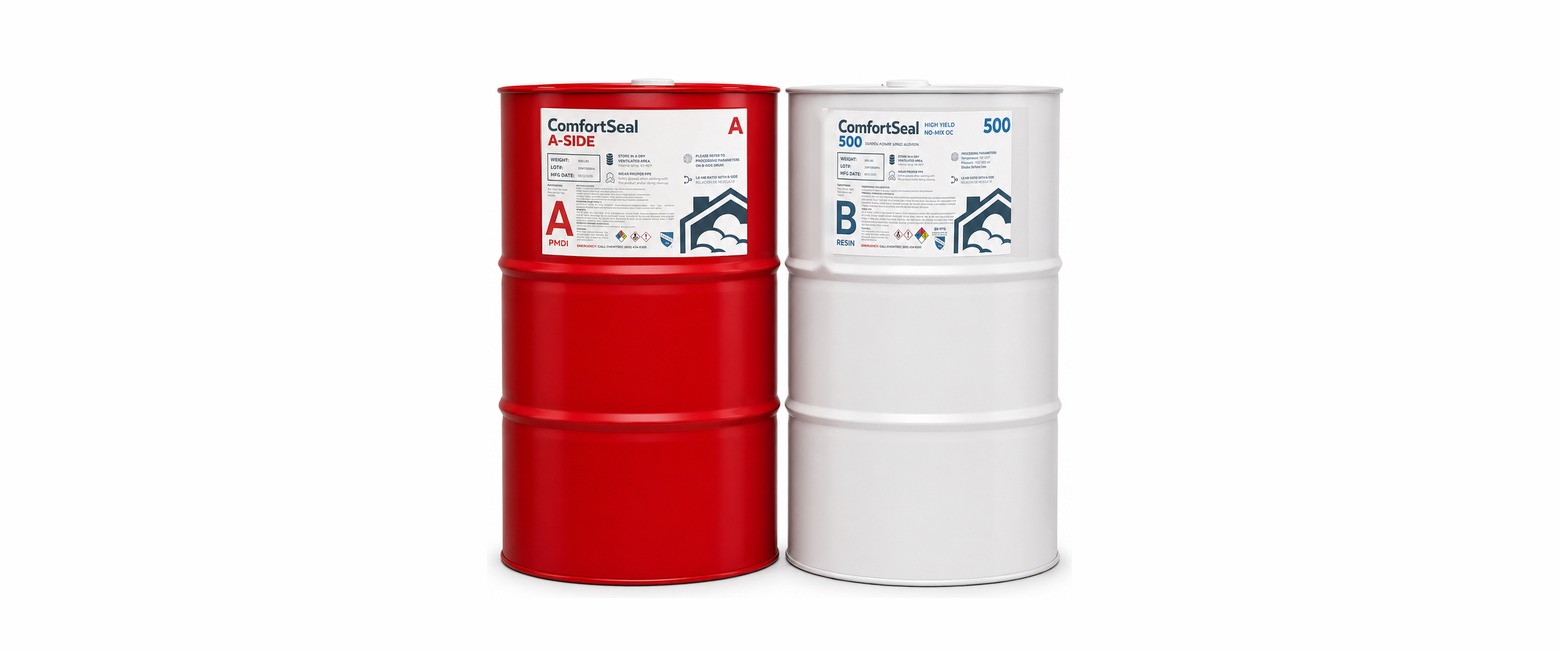
Interior walls, attic rooflines and quiet rooms. R-13 in a 2x4 wall, NRC 0.75.
The higher the R-value, the greater the insulating power. Ask your seller for the fact sheet on R-values.
See ComfortSeal 500 →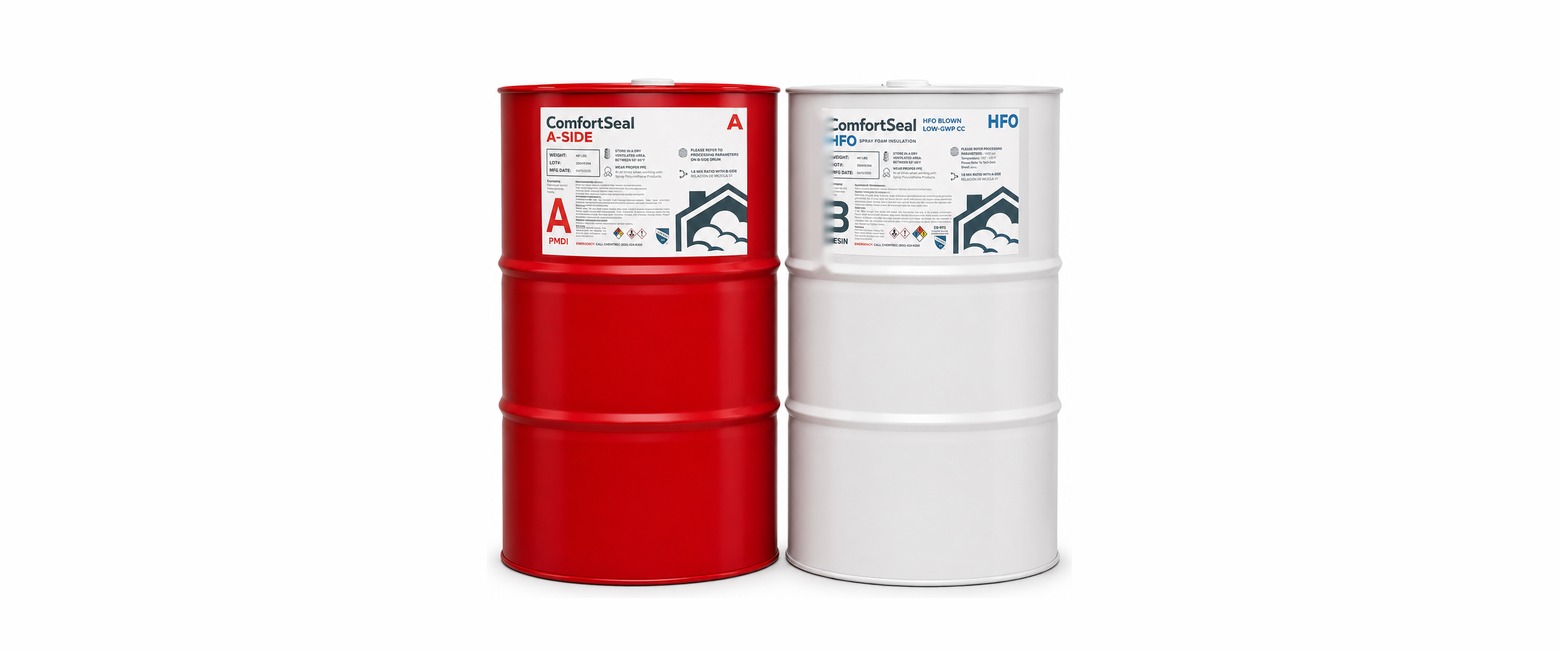
Exterior walls, crawl spaces and humid climates. R-25 in a 2x4 wall, a Class II vapor retarder.
See ComfortSeal HFO →What drives the price of spray foam
ComfortSeal makes the foam. We don't install it and we don't set installers' prices, so each certified installer quotes their own work. Two houses with the same floor plan can get very different quotes, and both can be fair.
Six things move the number most: open or closed cell (closed cell uses more material per inch and gives more R-value in the same depth, R-25 against R-13 in a 3.5-inch wall); the thickness your climate zone, code and that part of the house call for; how much area and which areas; access and prep, such as tight crawl spaces or removing old insulation; whether an ignition or thermal barrier coating is required; and local labor rates.
For a walk-through of each factor and the national ranges reported by third parties, with dates, read how much spray foam insulation costs. Those are national averages, not ComfortSeal prices.
How to compare quotes
Get every quote in writing, and check that each one spells out the same things, so you're comparing like with like.
Each quote should name the product for each area (ComfortSeal 500 or ComfortSeal HFO), the thickness and the R-value that thickness gives per the evaluation report, the area in board feet or square feet at a stated thickness, any ignition or thermal barrier coating and whether it’s included, prep, removal and cleanup, re-entry time, and the installer’s ComfortSeal certification and the warranty on the foam, in writing.
A lower price for thinner foam, or for a quote that leaves out a required coating, isn't a better deal. If an installer gives you an energy-savings estimate, ask how it was worked out: savings vary with your house, your climate and what the foam replaces. Our guide to how much spray foam insulation costs walks through each factor behind the number.
How much does spray foam insulation cost?+
It depends on the foam, the thickness, the area, access and prep, coatings and local labor rates. See what drives the price above, or our spray foam cost guide.
How long does installation take?+
It depends on how much area is being insulated, which parts of the house and how easy they are to reach. Your installer will give you a schedule for your home after the assessment.
Do I need to leave the house during installation?+
Yes. Occupants stay out while foam is being sprayed and until the area has been ventilated. Your installer will tell you when it is safe to return — follow their re-occupancy guidance.
Open cell or closed cell — which do I need?+
Open cell (ComfortSeal 500) is ideal for interior walls, attic rooflines and sound control. Closed cell (ComfortSeal HFO) gives more R-value in the same depth and acts as a vapor retarder, so it suits exterior walls, crawl spaces and humid climates. Many homes use both.
Is ComfortSeal evaluated for building codes?+
Both products are evaluated by IAPMO Uniform Evaluation Service — ER-974 for ComfortSeal 500 and ER-975 for ComfortSeal HFO — and both are Class I for flame spread and smoke developed under ASTM E84.
What does the warranty cover?+
Installs by certified ComfortSeal installers carry a limited lifetime warranty on the foam, for the life of the home. Installation workmanship is the installing contractor's responsibility; certified installation is a condition of coverage. The full written terms are being finalized; ask our team and we'll walk you through what's covered.
Ready for a more comfortable home?
Tell us about your house and we'll connect you with a certified ComfortSeal installer near you.